|
| Philadelphia coat of arms |
Philadelphia is rich with history, but even today, most do
not know that Philadelphia was the largest city in the colonies for a long
time. Many do not know it also acted as
the capital of our struggling country during the American Revolution. How did the city of Philadelphia, certainly
not the first settlement in the fledgling country, become “the place to be”
during the 1700s? Williamsburg was a
bustling metropolis. New York City was
ideally located. What made Philadelphia
the place for the delegates to gather all those years ago? In order to understand that, we must go back
and look at its history.
 |
| William Penn |
In 1646, the first church was built on Tinicum Island by the
Swedish. This group came to the area
first, although that did not stop King Charles II from giving a land grant to
William Penn in 1681. Before the Swedes and the Dutch arrived, the area was
inhabited by the Lenape Indians. The
land we know of as Philadelphia and Pennsylvania was actually part of New
Netherland when it was settled by the Dutch.
The English did try to establish a settlement in the area in 1642 near
the Schuylkill River but the Swedes and Dutch burned their homes, so the
settlers evacuated the area.
 |
| The Old Courthouse |
As stated above, King Charles II of England gave the land
grant to William Penn. Only 50 Europeans
were still surviving in the area by 1682.
The land called Pennsylvania by King Charles, was as repayment for
William’s father’s loyalty to the Crown during the English Civil War when the
Roundheads took over, kicking out King Charles’ father. William Penn did not want the land named
after him, but the king insisted. When
Penn arrived in the New World, he went about purchasing the land from the
Lenape. He was a Quaker and believed in
peace. He felt if he purchased the land
from the native tribe, they would not attack the settlers for taking away the
land. This was a historic decision. No other Englishman purchased the land from
the native tribes, just taking what the kings had given them or taking what
they wanted and calling it their own.
 |
| King Charles II |
When William Penn planned the city of Philadelphia, he used
a grid pattern because he wanted a uniformity that reminded him of London. He
liked having the streets running north and south and east and west. The city
itself got the name from “philos” for love/friendship and “adelphos” for
brother. The streets were first named
for prominent landowners, but later were named for trees. The city originally ran from the Delaware
River to the Schuylkill River (east and west) and from South Street to Vine
Street (north and south). As more and
more people settled around the city, it incorporated those areas into the city
as well. William Penn wanted the city
wide and with orchards. Obviously if you walk the streets today, there
certainly does not appear to be room for orchards.
 |
| Congress Hall and New Theater |
 |
| First Bank |
 |
| Library and Surgeon's Hall |
 |
| Corner of Market |
 |
| Second Street North |
 |
| State's House |
By 1701, the city had grown to over 2500 people. That was quite an explosion in only 20
years! It wasn’t just English – it was
Welsh, Irish, German, Swedes, Finns, Dutch, and African slaves who made up the
population. William Penn’s idea of
religious freedom and a home for all. Of
course, at the time, slaves were arriving by ships from Africa, and while later
Pennsylvania would abolish slavery, at this time, slavery was allowed. James Logan became the first mayor in 1701.
 |
| Independence Hall |
William Penn established a charter to make Philadelphia a
city with aldermen, councilmen, and a mayor.
He felt it was important that everyone was represented by the
government. Philadelphia was ideally
situated along the Delaware River, making it a perfect port for exporting and
importing goods. This also made it
important for settlers. They could
arrive by ship here and then migrate to other areas in the colonies. The main trade in Philadelphia was with the
West Indies. Sugar cane arrived as part
of the Triangular Trading route. As the
surrounding areas of Philadelphia became agricultural, the people began to
export grains, lumber, and flax seed.
While many first moved to Philadelphia seeking religious freedom, others
arrived in search of opportunity. After
all, as a growing city – think of all the jobs which would need filling or even
creating – bakers, cobblers, coopers, blacksmiths, etc.
 |
| William White |
By 1750, Philadelphia was a major city. Christ Church was the main place of worship
although there were many other churches.
Men of all faiths often gathered at Christ Church to worship (remember
the freedom of religion? Well, no one ever said – no you cannot worship here
because it’s not your faith.) The
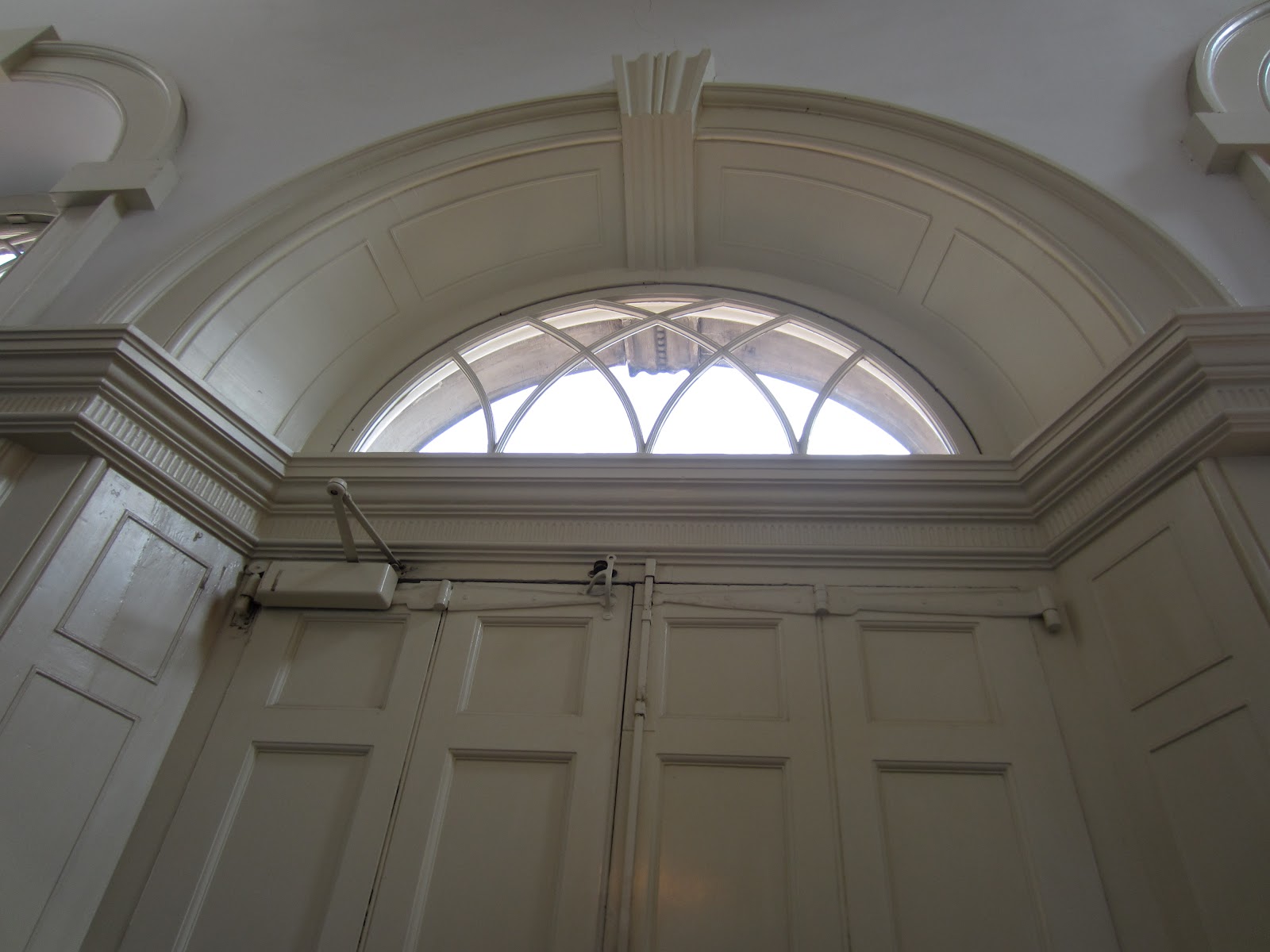
Pennsylvania State House was built here (we know it as Independence Hall). Soon the streets were paved. Schools were built as children were born and
the families grew. Even libraries,
thanks to Benjamin Franklin, were established in the city.
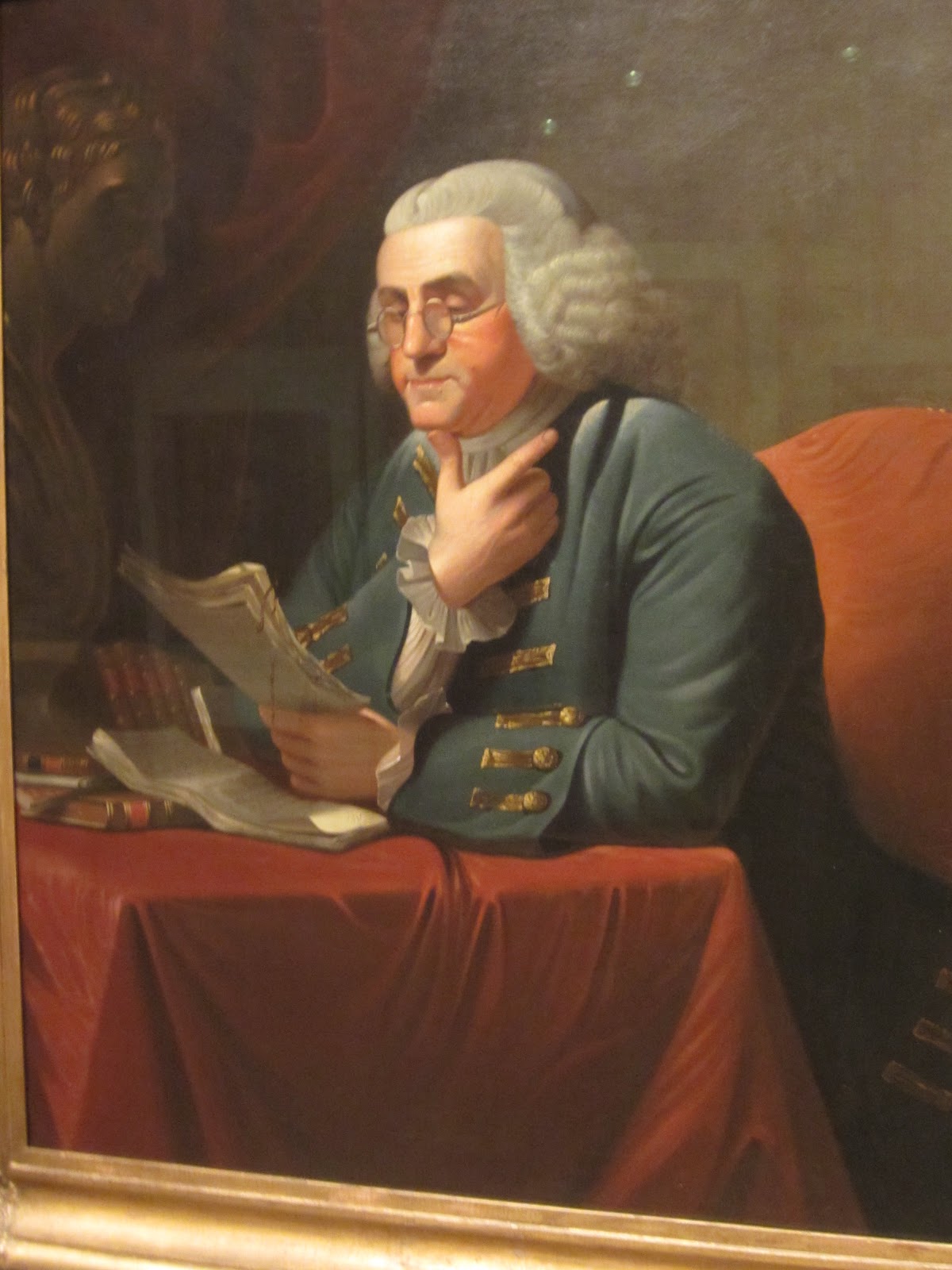 |
| Benjamin Franklin |
Benjamin Franklin arrived in Philadelphia in 1723 seeking
his own fortune. While he worked for his
brother in Boston, he could not publish his writings. He traveled to Philadelphia and soon had his
own printing press and newspaper. He was
responsible for Philadelphia’s first firehouse, first library, first hospital,
and many more places!!! He was quite the
forward thinking man!
In 1752 the first hospital opened. The College of Philadelphia, which later
became the University of Pennsylvania was established here. Even a militia was formed to protect the city
as tensions began to rise against the British.
The First AND Second Continental Congresses were both held in
Philadelphia. And of course, we all know
that the Declaration of Independence was signed here in 1776.
A few other important Philadelphia men include:
Robert Morris – he began his life in Maryland in 1734. He was a shipping partner with Thomas
Willig. He helped smuggle supplies to
the city during the Revolutionary War.
He owned the President’s House and let George Washington live
there. It was the grandest house in the
city after all and was perfect for our first president.
John Bartram – was born in 1699. He was a botanist. In 1765 he became the King’s botanist but
later was known to discover many plants.
A high school in the city is named after him. He founded the American Philosophical
Society.
Benjamin Franklin – he may not have been born in
Philadelphia but he spent most of his life there. Besides discovering the
presence of electricity in lightning, he created bifocals, the Franklin stove,
and the armonica. He helped write the Declaration of Independence with Thomas
Jefferson and three other notable men.
Betsy Ross – she sewed our first flag – the famous flag with
thirteen stripes and thirteen stars on a blue field.
Peggy Shippen – she married Benedict Arnold and many believe
she convinced Arnold to become a traitor while he was residing in
Philadelphia. Of course, no one knows
for certain, but she was a prominent lady during the occupancy of Philadelphia
by the British.
Gilbert Stuart – most of you don’t know this – but he is
person who painted the picture you see every day of George Washington – his face
on the dollar bill.
Bishop White – William White was the head of the Anglican
Church in Philadelphia. He took over
when Jacob Duche was recalled to Britain. He became the rector at Christ and
St. Peter’s Churches. His brother –in-law
was Robert Morris. He was the Chaplain
of the Continental Congress and then the US Senate.
Samuel Powel was the first colonial mayor of
Philadelphia. He came from a wealthy
family and entertained George and Martha Washington. During the Revolution he was one of the few
wealthy families who sided with the colonials.
John Dickinson - was born in 1732. He was a lawyer and fought during the Revolutionary War. He was a delegate to the Continental Congress. He signed the Articles of Confederation. Dickinson College is named after him.
Many more famous Americans passed through Philadelphia while
it was becoming a country. Philadelphia
was centrally located at the time of the Revolution and because of its location
along the Delaware River, made it easily accessible.